Each module works standalone — the integrated dashboard connects them into a single decision layer.
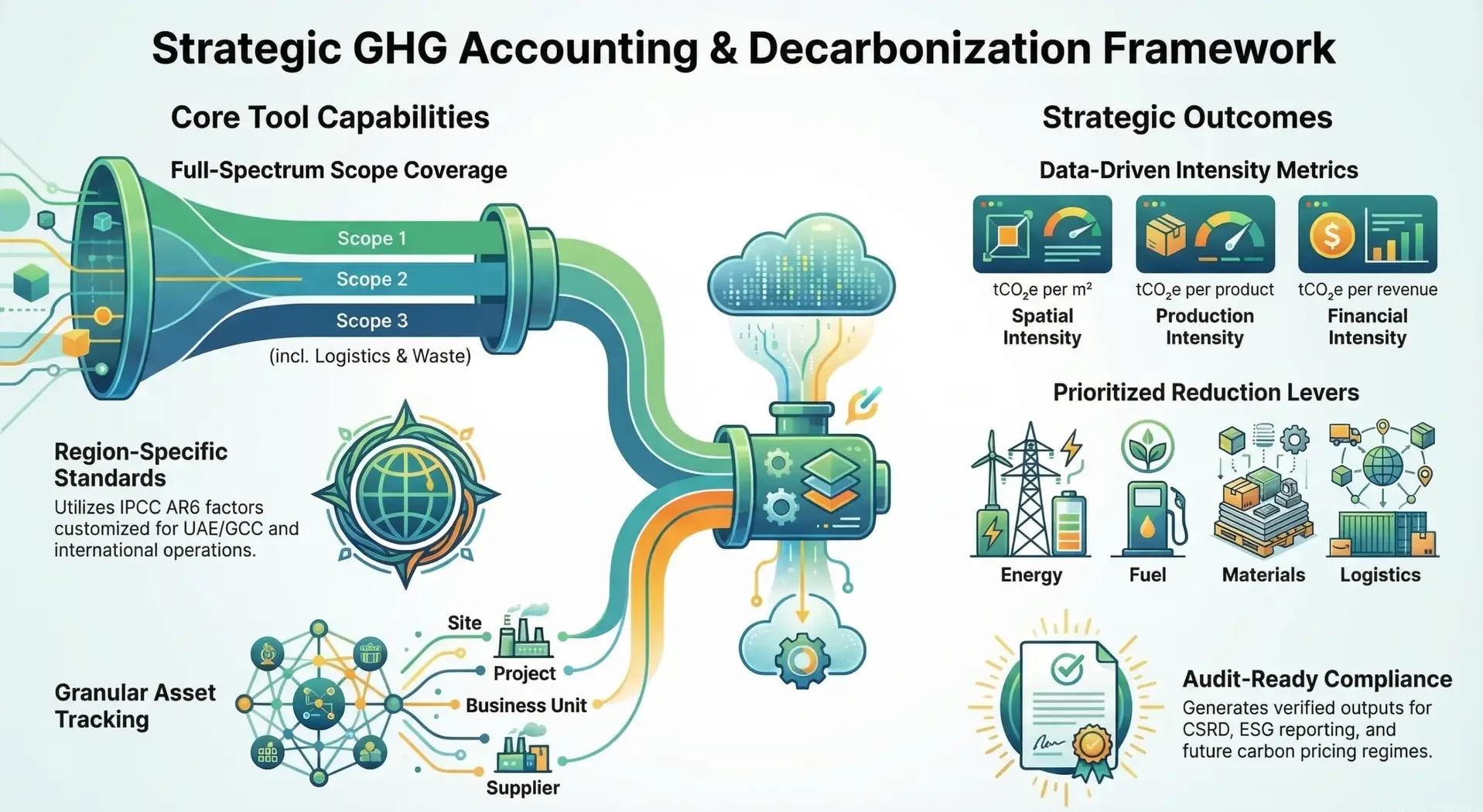
GHG & Carbon Footprint Tool
The tool converts operational data into a greenhouse gas emissions inventory covering Scope 1, 2, and key Scope 3 emissions. It identifies emission hotspots and produces audit-ready outputs for ESG and compliance reporting.
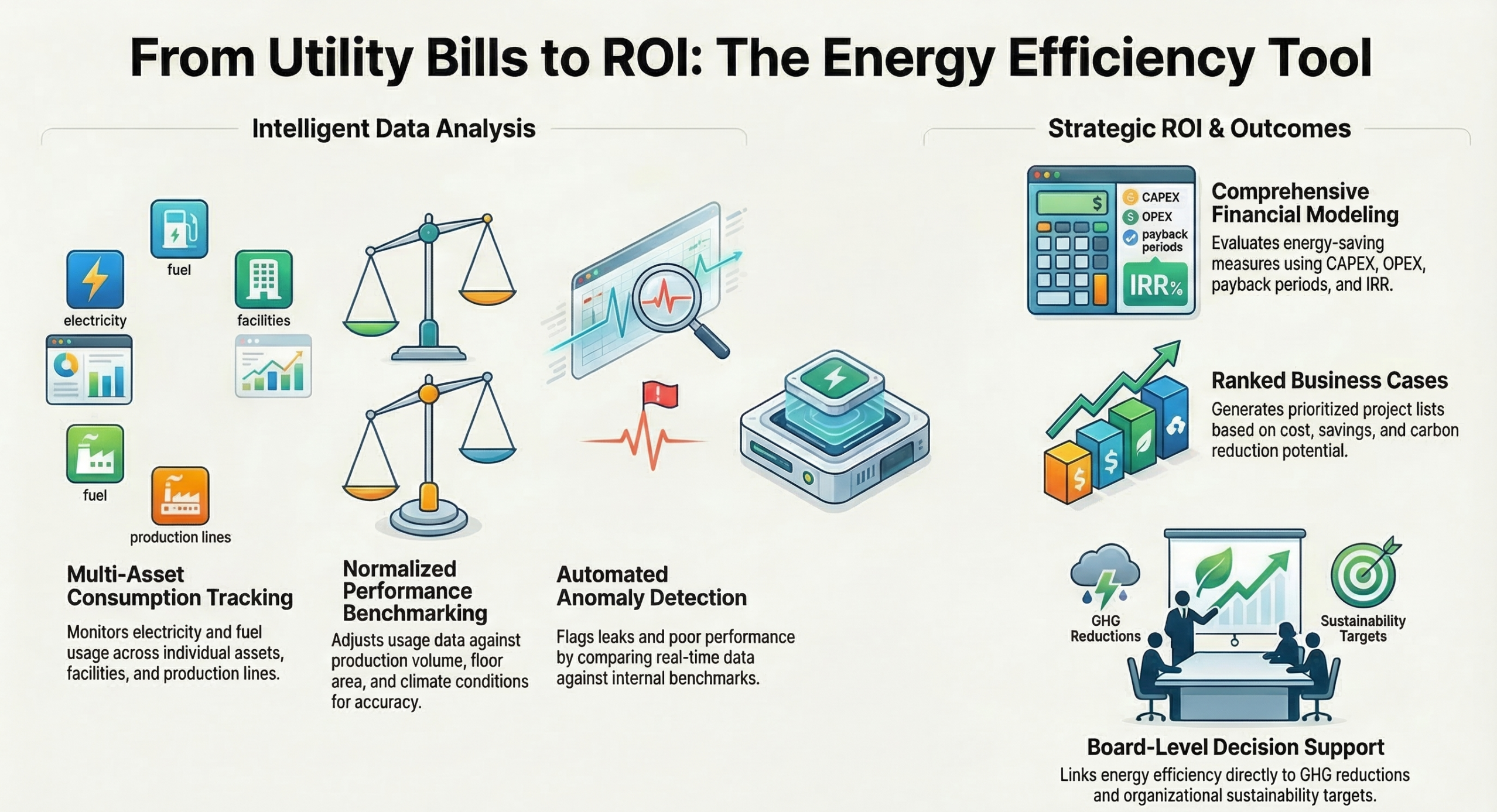
Energy Efficiency Tool
The tool analyzes utility bills and metering data to track energy use and detect inefficiencies across assets and facilities. It identifies energy-saving opportunities and connects them to financial metrics, GHG reductions, and cost savings for decision-making.
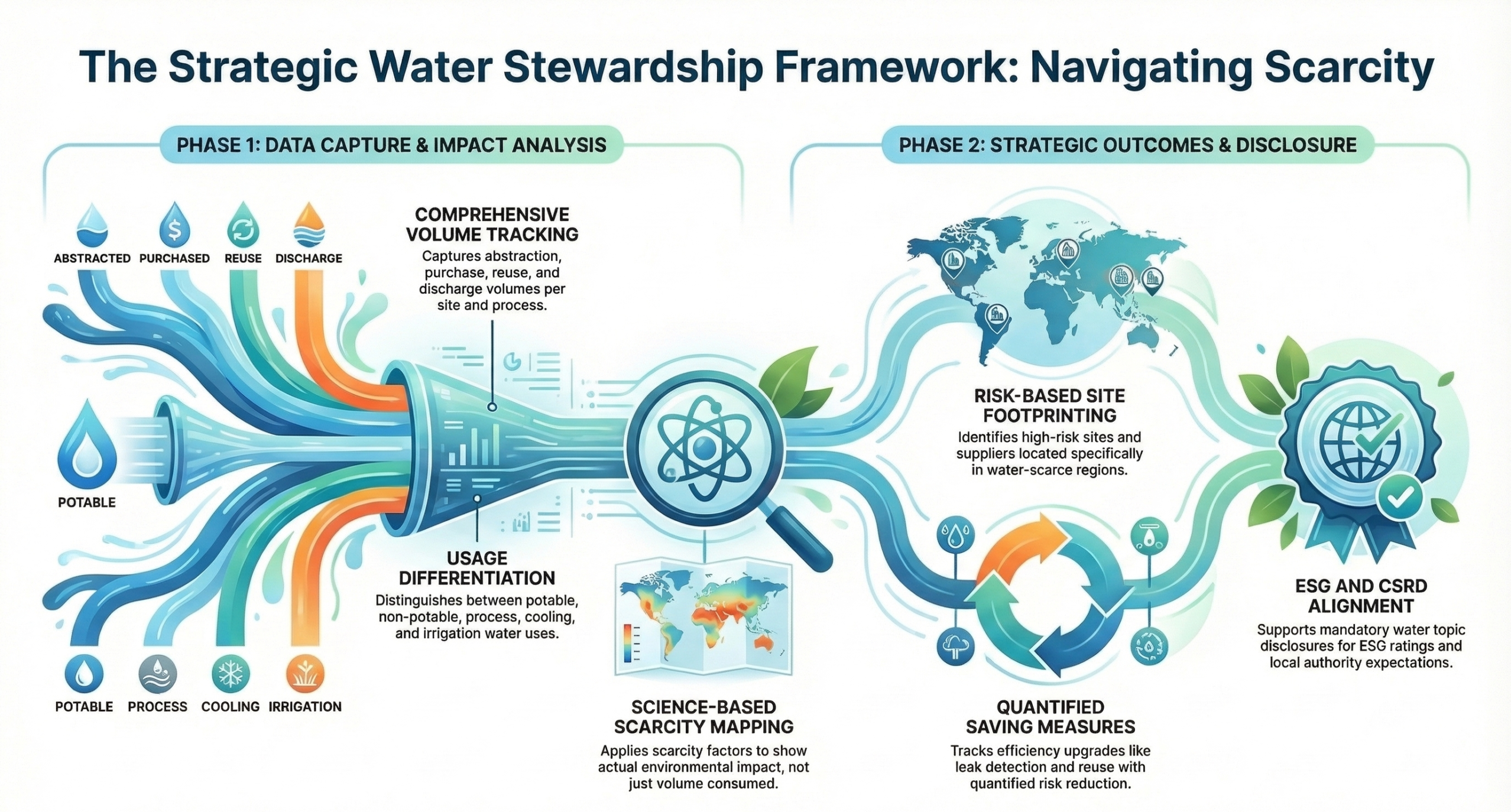
Water Management & Water Footprint Tool
The tool manages water risks by tracking water consumption, discharge, and scarcity factors across sites and processes. It identifies high-risk locations, measures water efficiency improvements, and provides data for ESG and regulatory reporting.
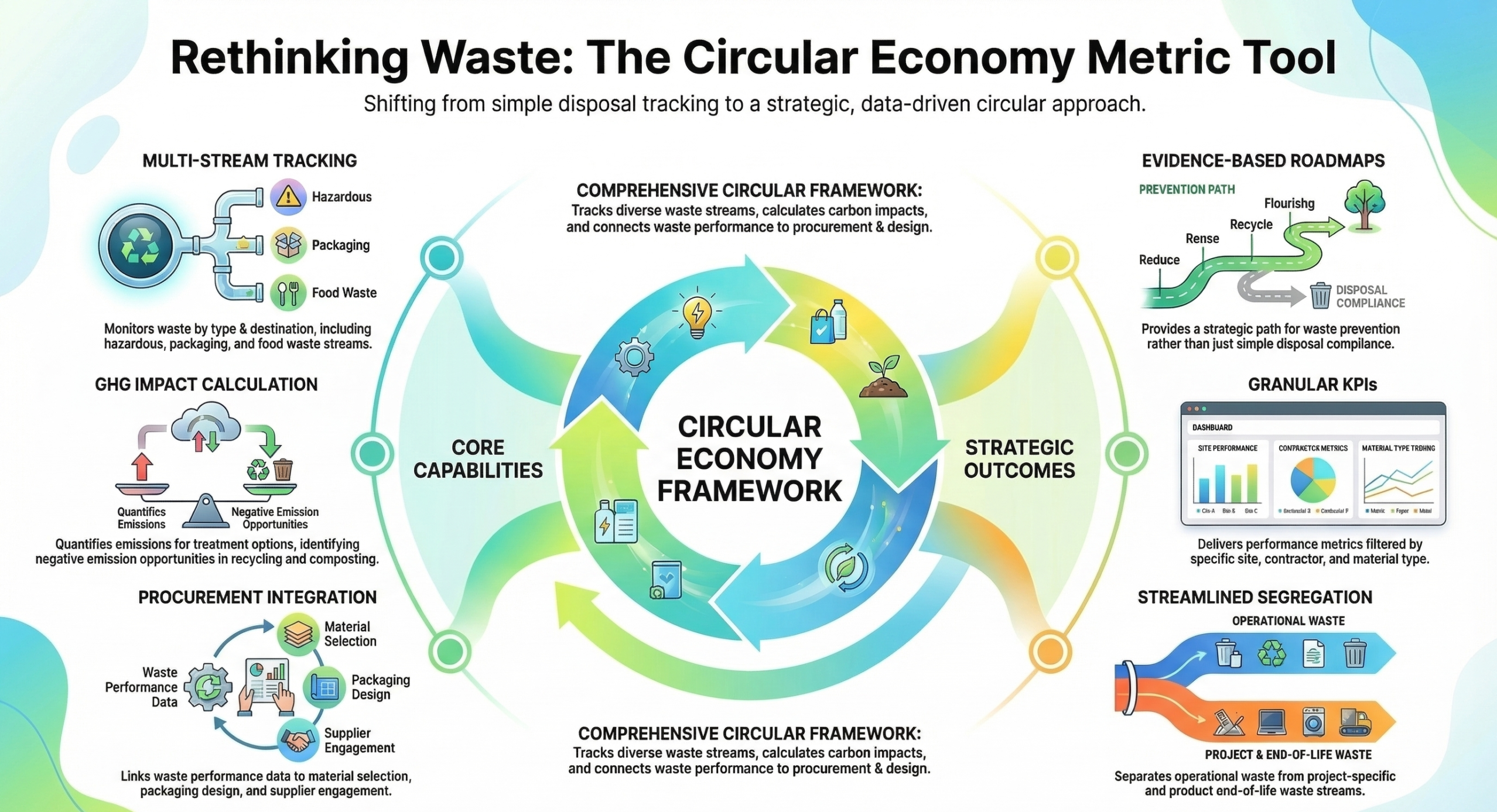
Waste & Circular Economy Tool
Tracks waste streams by type and destination, measures their environmental and GHG impacts, and identifies opportunities for waste prevention, recycling, and circular practices. It produces clear circularity KPIs and supports better material, procurement, and sustainability decisions.
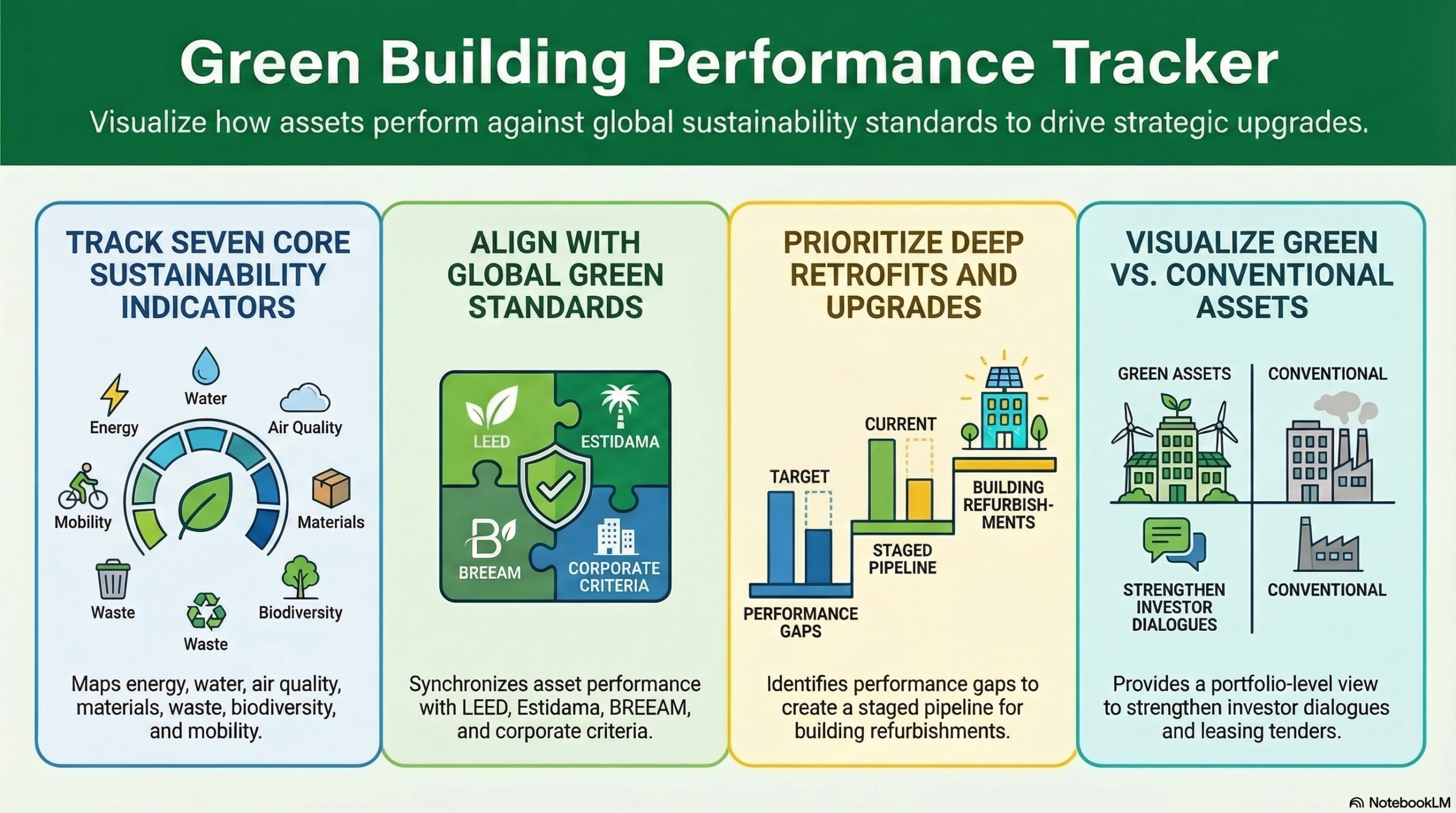
Green Building & Asset Sustainability Tool
Evaluates building performance across indicators such as energy, water, materials, air quality, and waste, aligned with major green building standards. It identifies upgrade opportunities and provides a portfolio-level view to support sustainable asset management and development.
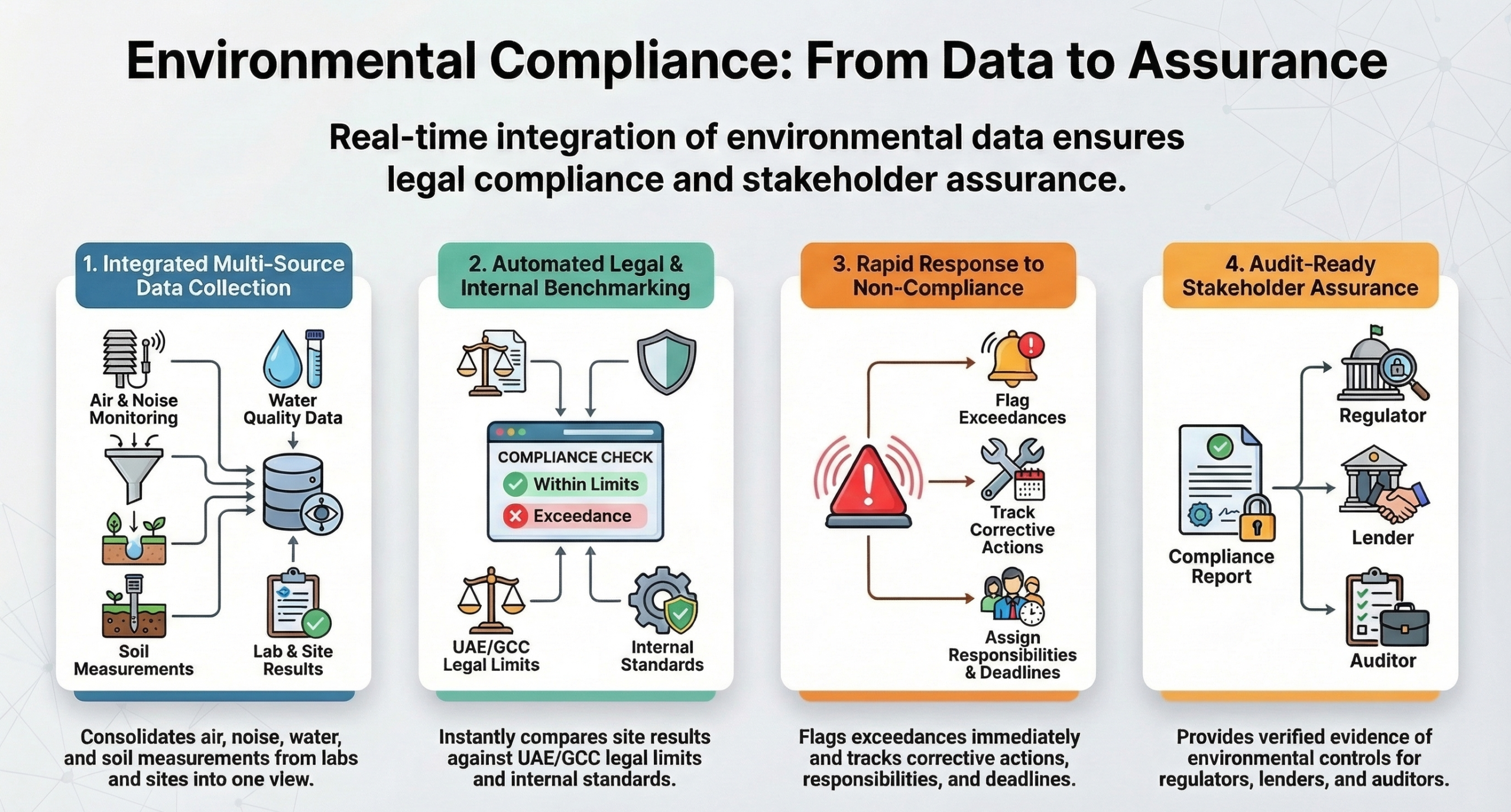
Environmental Impact Monitoring & Compliance Tool
Integrates environmental monitoring data and compares it with legal standards to track compliance and flag risks. It records corrective actions and provides clear evidence for regulators, auditors, and management.
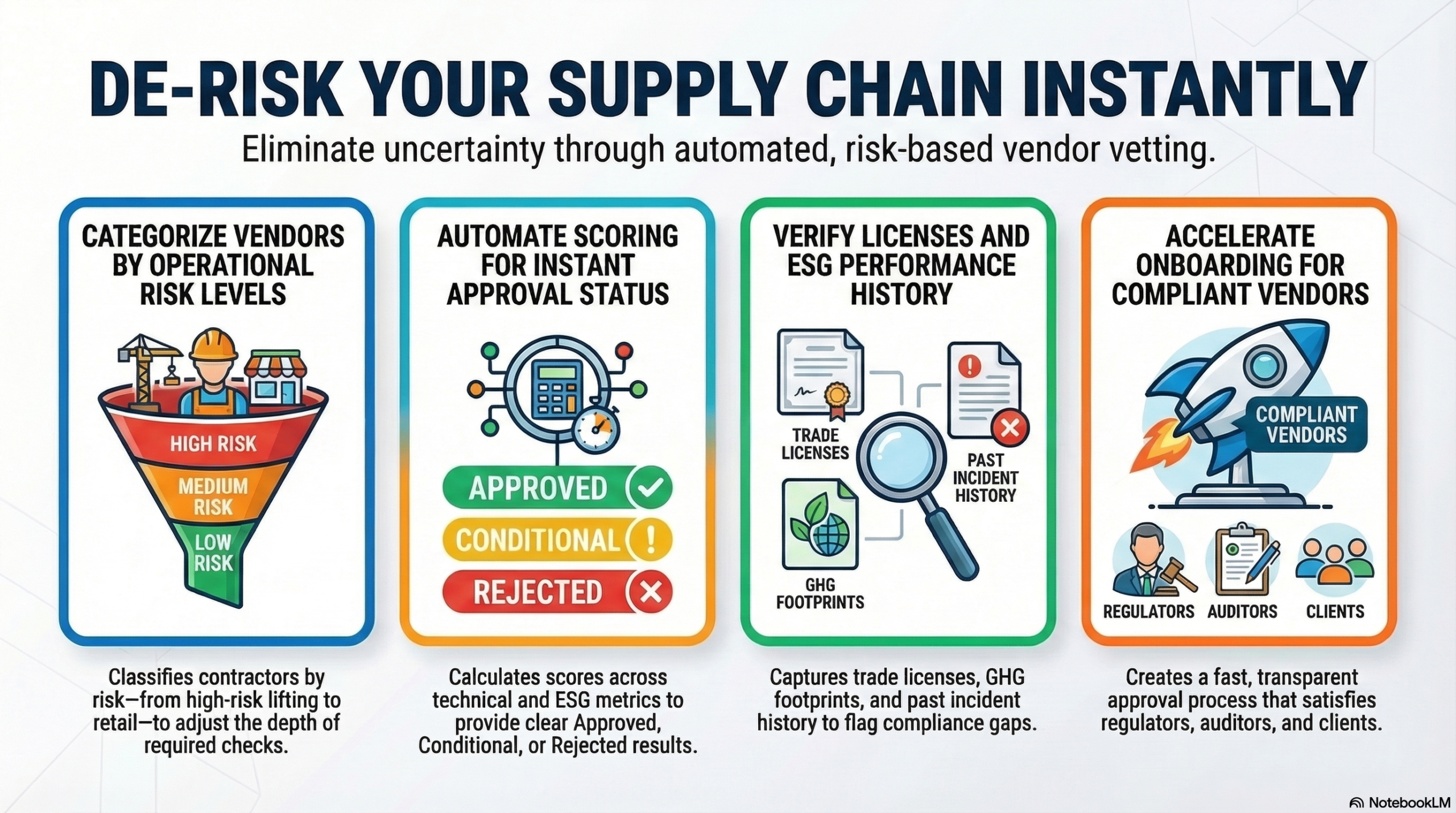
Supplier & Contractor Prequalification Tool
Evaluates suppliers and contractors based on QHSSE, ESG, compliance, and performance history before approval. It uses risk-based assessments and scoring to ensure a transparent and reliable supply chain.
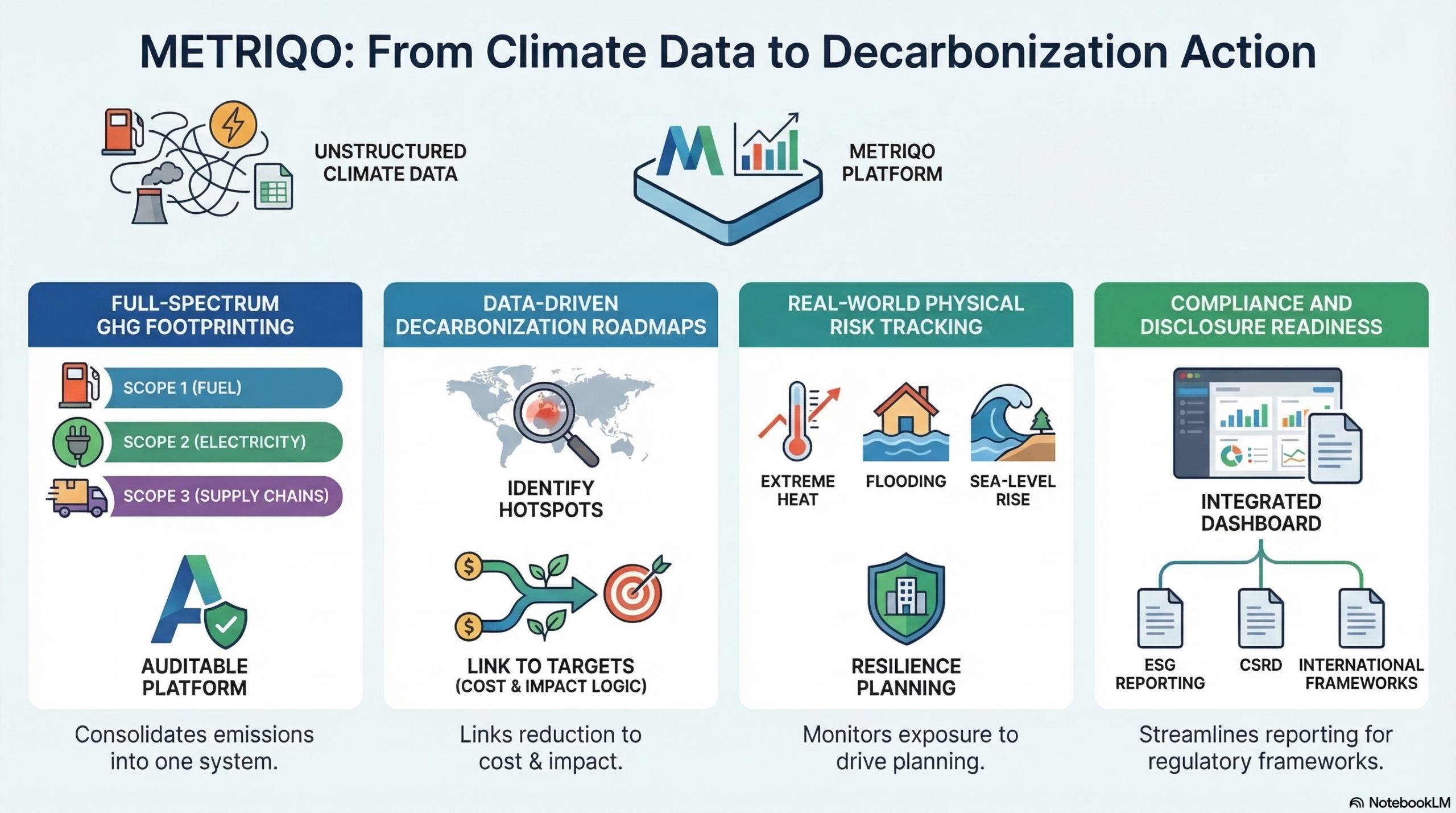
Climate Change Tool
Centralizes emissions data, climate risks, and reduction strategies into one platform to support decarbonization planning and reporting. It helps organizations track emissions trends, identify hotspots, and manage climate-related risks.
HSE Tool
Tracks incidents, inspections, risks, and compliance across operations to improve health, safety, and environmental performance. It provides dashboards and alerts to strengthen accountability and reduce operational risks.
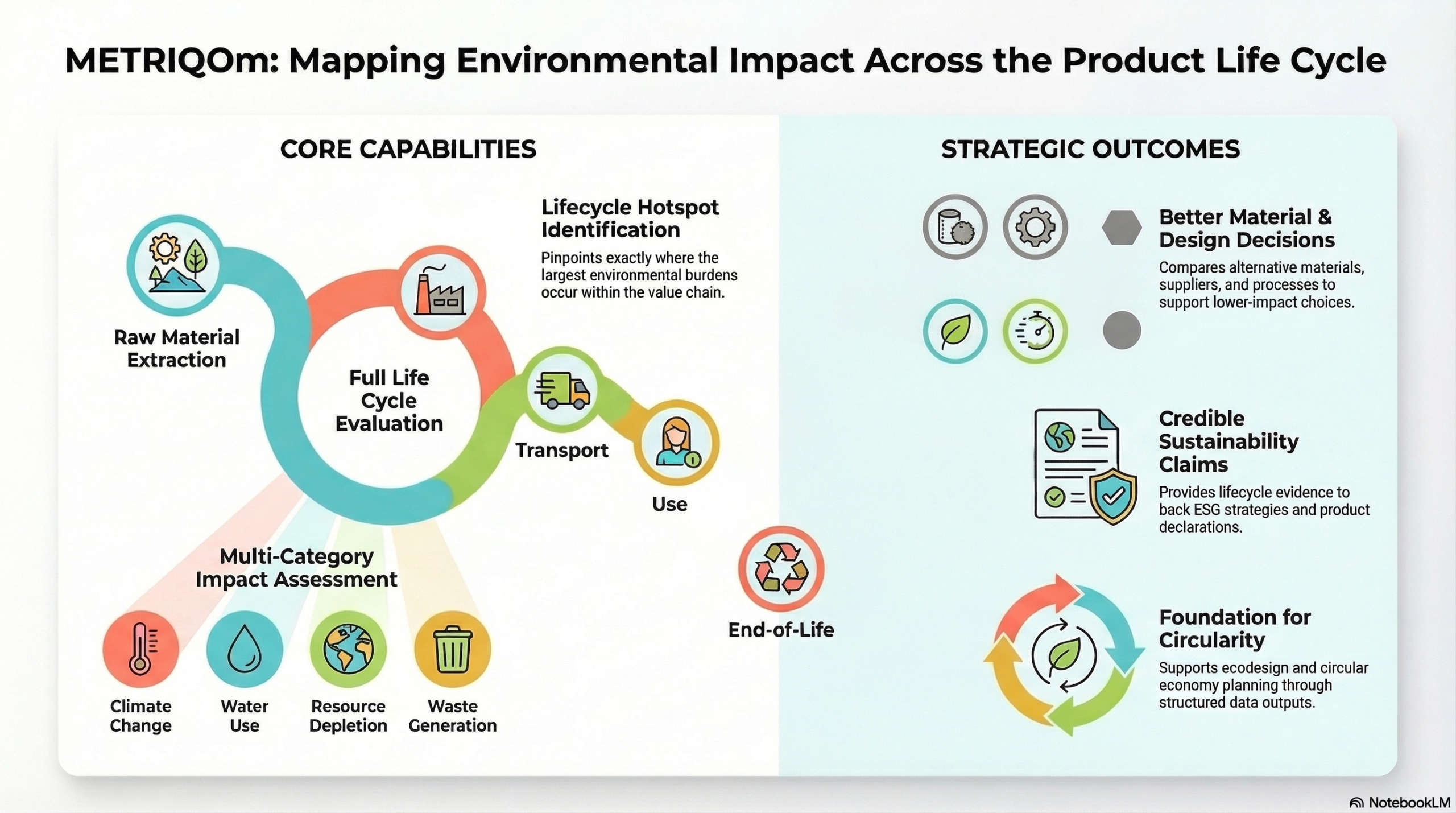
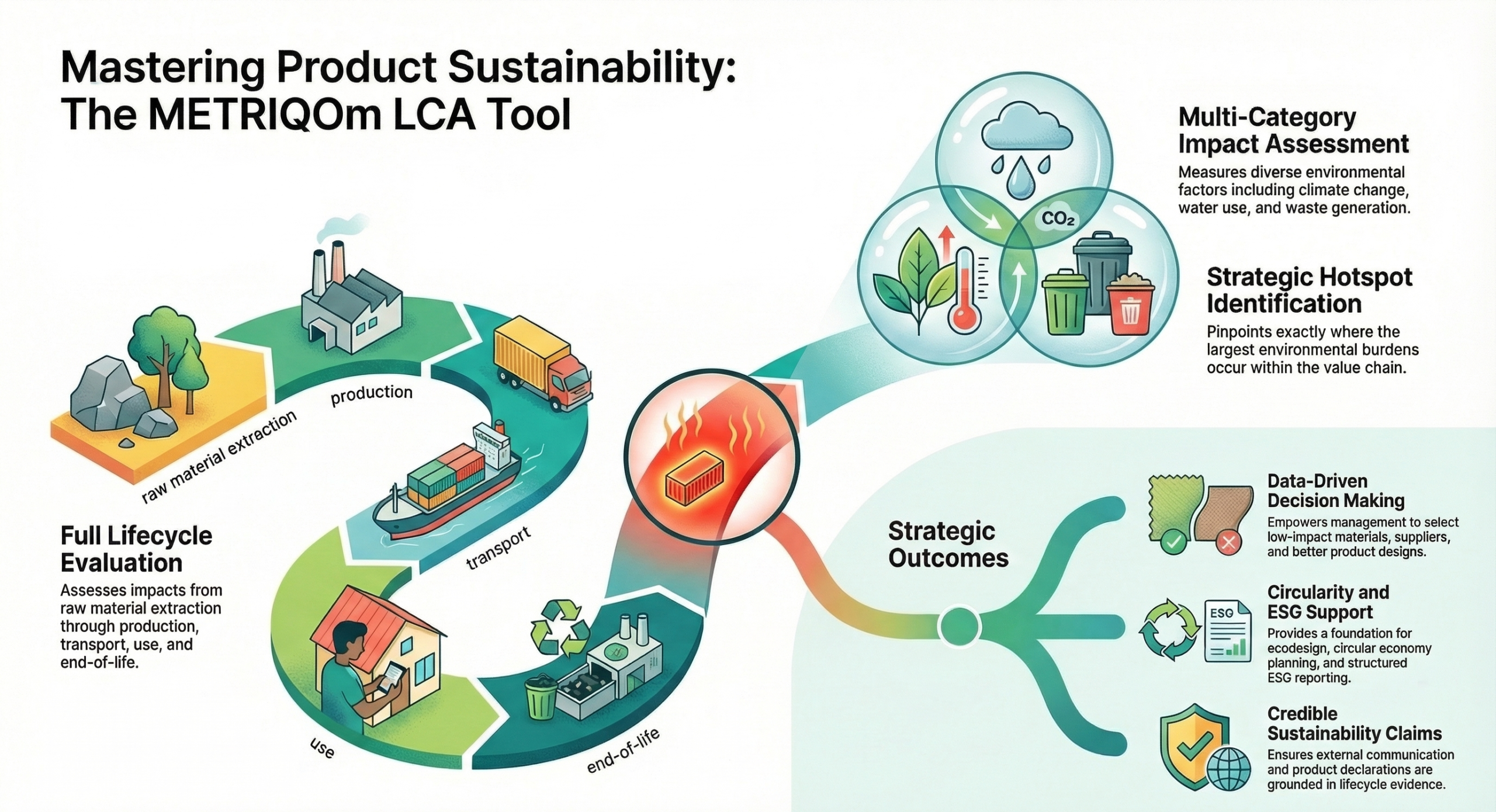
LCA Tool
Analyzes the full environmental impact of products and materials across their life cycle. It identifies environmental hotspots and supports better decisions in design, procurement, and sustainability strategy.